
How to spot quality screen printing (before you pay for it)
Two shops, same price, wildly different shirts. Here are the nine tells professional printers check — and the questions that separate real shops from shortcut artists.
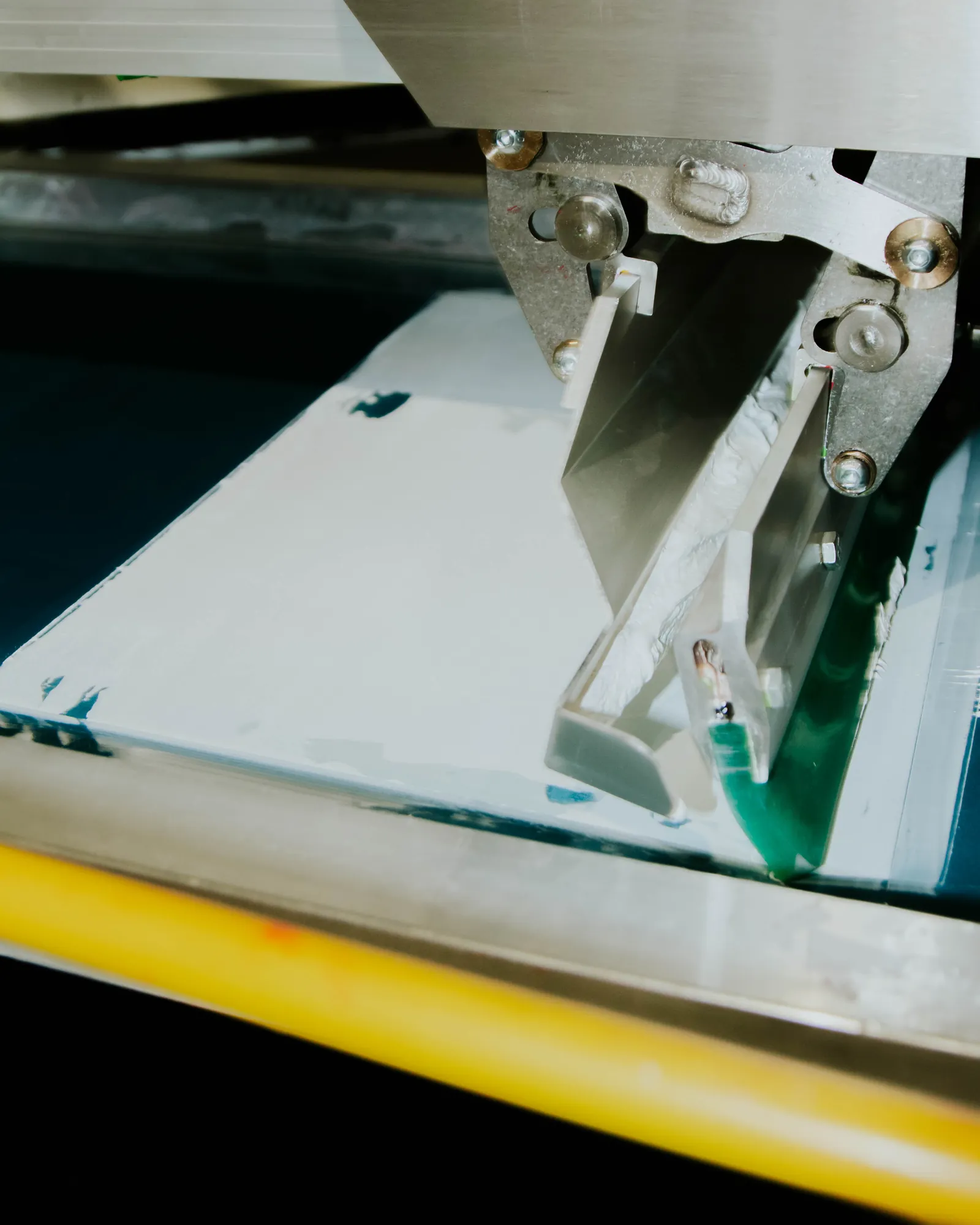
Here's the uncomfortable truth about custom shirts: two shops can quote the exact same price per shirt and hand you two completely different products. One print outlives the garment. The other cracks into a dry riverbed by week three. Same price, same mockup, wildly different shirt.
The difference lives in steps you never see — cure temperature, screen tension, mesh counts, prep discipline. We're Fully Exposed Graphics, a screen printing shop in Albuquerque, and this is the checklist we'd use if we were the ones buying. Nine tells, then the exact questions to ask before you hand any shop your money.
Why print quality varies so much between shops
Screen printing has no shortcut police. A shop can skip the underbase, run tired low-tension screens, eyeball placement, and cure "close enough" — and the shirts still look great in the pickup photo. Every corner cut is invisible on day one. It only shows up in the wash, on the fifth shirt in the stack, or under daylight next to your actual brand color.
That's why price alone tells you almost nothing. Process does. Ask for an itemized quote so you can at least see what a shop is charging you for — ours breaks out the blank, the print and the finishing — then use the nine tells below to judge everything the quote can't show you.
The 9 tells: how to tell if a print is good quality
1. Ink cure — the wash test
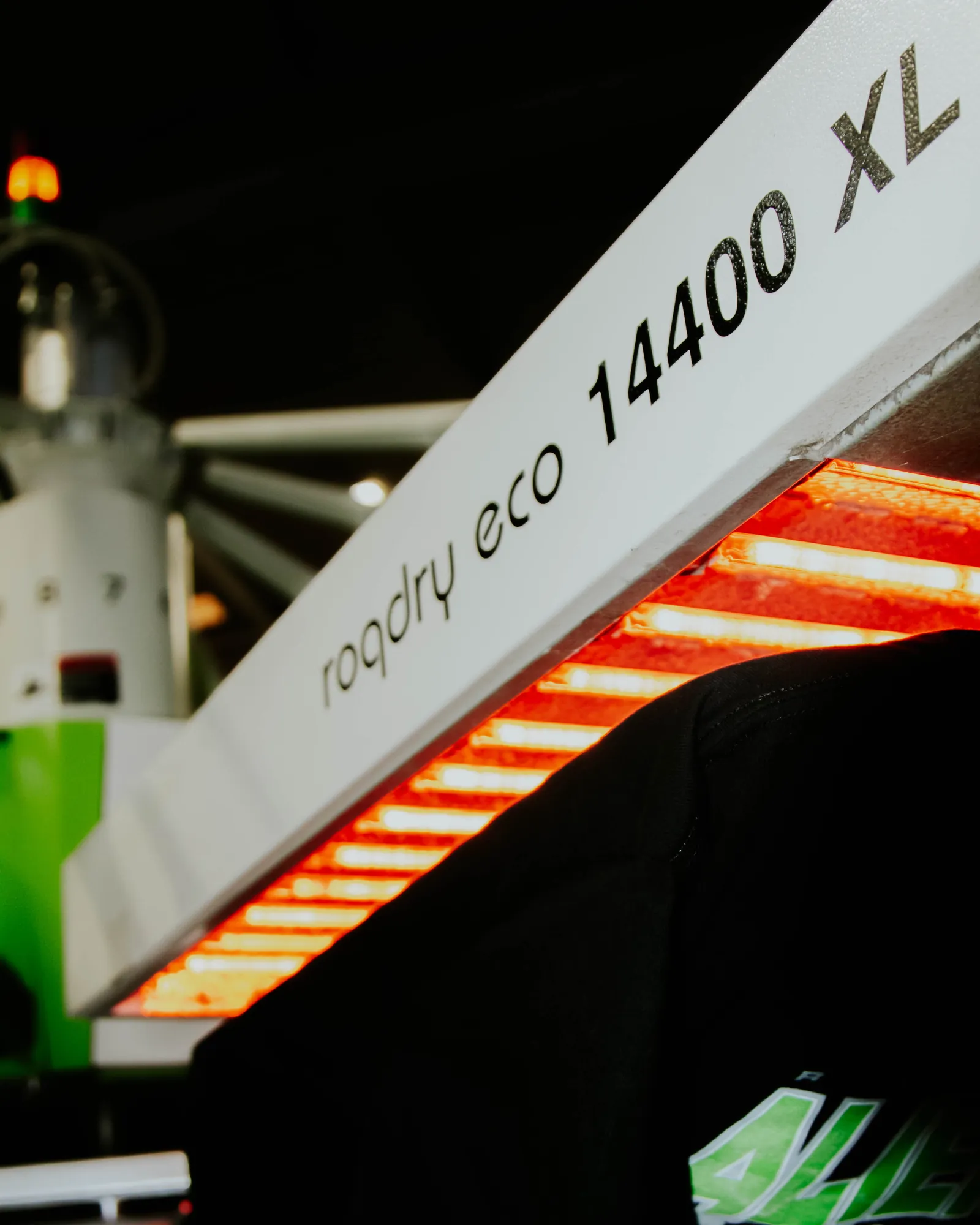
This is the big one. Plastisol ink doesn't dry — it cures, and it has to hit roughly 320°F through the entire ink layer, not just the surface. A print that only got surface heat looks perfect at pickup, then cracks and flakes by wash five.
Proper cure takes a conveyor dryer with dialed-in temperature and belt speed, verified with a probe or a wash test — not a heat gun waved at the surface. If you already own the shirt, run the test yourself: wash it five times, normal cycle. A quality print won't care. An under-cured one will confess.
2. Registration — do the colors line up?
On a multicolor design, look at the spots where two colors meet. You should see clean seams — no slivers of shirt color peeking through, no ghosted halo where an outline drifted off its fill. Tight registration means the screens were properly tensioned and the press was set up with care. Loose registration means somebody was in a hurry, and everything else probably got the same treatment.
3. Opacity on dark garments
White ink on a black tee should read white — not grey, not murky. That takes a proper underbase: a base layer of white printed first, flash-cured, then the colors printed over the top. Skip the underbase (or thin it out to save press time) and every color goes dull and washed-out. If a shop's black-shirt samples all look faded fresh off the press, that's not a style choice. That's a skipped step.
4. Edge crispness
Sharp lines come from high-tension screens, the right mesh count, and a clean exposure. Blurry edges, sawtooth curves, or fine type that filled in solid all point to tired screens or sloppy off-contact. The stress test: look at the thinnest linework and smallest text in the design. If it's crisp there, the shop's screen room knows what it's doing.
5. Hand — how the print feels
"Hand" is printer-speak for how the print feels on the fabric. Thick isn't automatically good. The ink deposit should match the design: a bold team number can carry a heavy, durable deposit; a distressed vintage graphic should be soft enough that you barely feel it. What you don't want is a bulletproof plastic slab on every job because the shop runs one low mesh count for everything. A quality printer chooses the deposit on purpose.
6. Placement consistency across the run
Pull five shirts from the stack and lay them out. The print should sit in the same place on every one — measured from the collar, not eyeballed. A print that wanders an inch between shirts, or sits crooked on a few, means garments were loaded carelessly. On a 50-piece order, that's 50 chances to get it wrong.
7. Pinholes and lint marks
Tiny unprinted specks inside a solid area are pinholes — dust that landed on the screen during exposure and blocked the emulsion. Stray fibers printed into the ink are lint marks. Both are small, and both tell you everything about a shop's screen-prep discipline: clean coating room, taped screens, lint-rolled garments. Shops that sweat the invisible stuff don't ship prints with freckles.
8. Color match — Pantone or "close enough"?
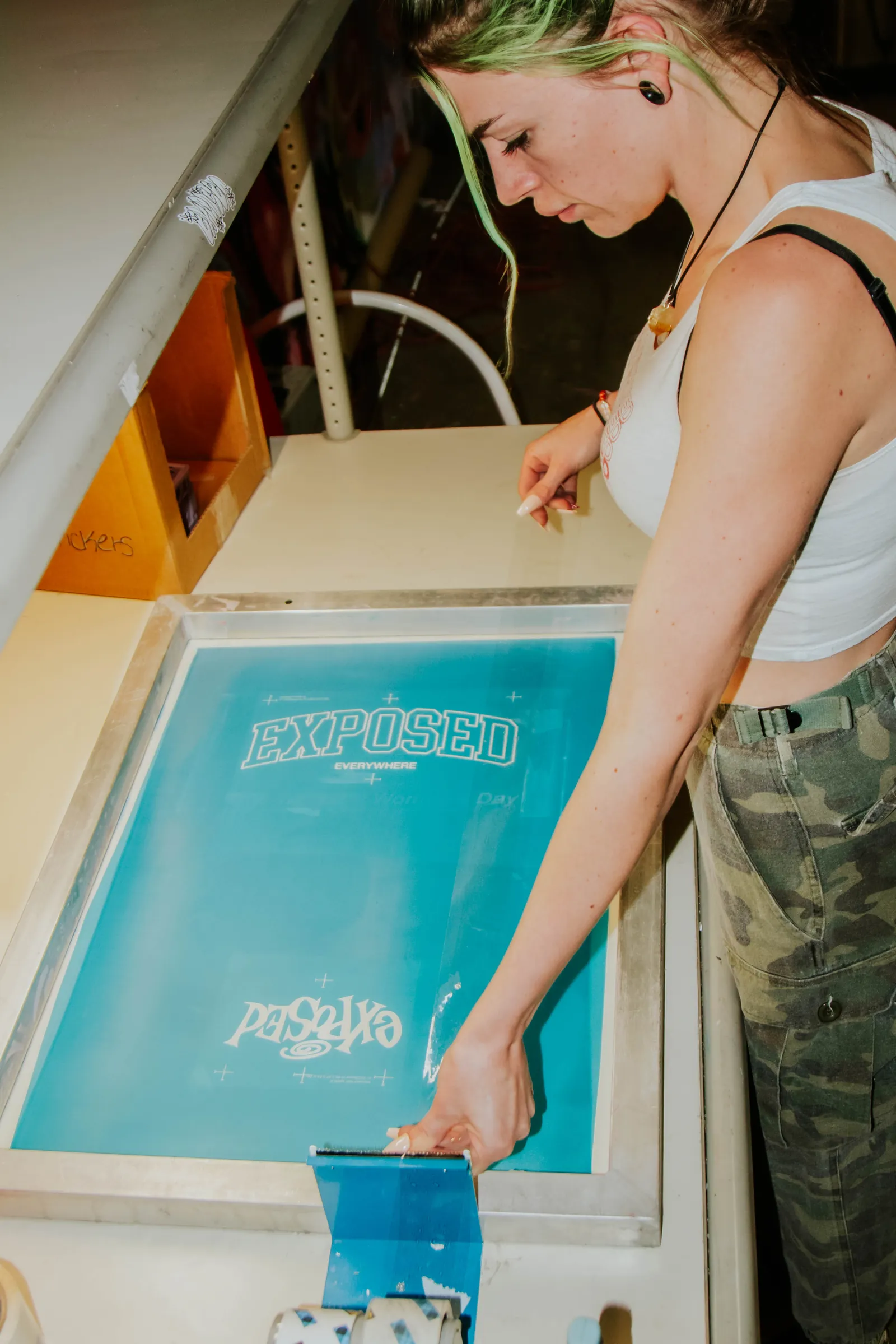
If your brand red is PMS 186, your shirts should be PMS 186 — under daylight, not just under shop lights. Serious shops mix ink to Pantone formulas with a scale and keep a mix log, so your reorder next year matches this year's run exactly. "We had a red on the shelf" is how a brand's merch slowly drifts into three different reds. Ask how they match color and listen for the word Pantone.
9. The blank itself
A great print on a bad shirt is a bad shirt. If the tee twists after one wash, pills at the shoulders, or has a collar like sandpaper, nobody's admiring the registration. Ask what blank brands the shop runs — names like Comfort Colors and AS Colour signal a shop that cares what happens after pickup. We ranked our favorites in the best blank t-shirts for screen printing.
The 30-second version: wash test for cure, seams for registration, white-on-black for opacity, thin lines for screens, five shirts for consistency. Any shirt that passes all five came from a real shop.
Questions to ask any shop before you pay
You don't need to inspect a single shirt if you ask the right things up front:
- "Do you cure with a conveyor dryer, and how do you verify cure temp?" The answer should involve a dryer and a method — not a shrug.
- "Can I see a proof before you print?" A digital proof with print size, placement, and colors should be standard, and nothing should hit a press until you approve it.
- "What blank brands do you use — and can I choose?" A shop proud of its blanks will name them instantly.
- "Can I get an itemized quote?" Garment, print, setup, fees — line by line. If the number is one mysterious lump, keep shopping. (Here's what screen printing actually costs, so you know a fair number when you see one.)
One more that costs nothing: ask to see recent work. Photos of real orders — not stock mockups — are the fastest honesty check in the industry.
Quality print FAQ
Why do screen prints crack?
Almost always under-cured ink. Plastisol needs about 320°F through the full ink layer; surface-only heat leaves the print soft underneath, and the wash finds out first. Bad art choices and the wrong ink for stretchy fabric can contribute, but cure failure is the usual suspect.
How long should a screen print last?
The life of the garment. A properly cured print fades gradually with the fabric over years of washing — it doesn't crack, peel, or flake. If a print falls apart in its first handful of washes, that's a process failure, not normal wear.
What makes screen printing high quality?
All nine tells above, working together: full cure, tight registration, opaque coverage on darks, crisp edges, a deliberate ink deposit, consistent placement, clean screens, Pantone-matched color, and a blank worth printing on.
The standard we hold ourselves to
This list isn't hypothetical — it's our own production checklist. Every order at Fully Exposed gets a digital proof before a single screen is coated, gets cured on a calibrated conveyor dryer, and gets hand-inspected coming off the belt. It's how our screen printing earned a 5.0-star Google rating across 35+ reviews, and it's why we're comfortable telling you exactly what to look for.
Judge us by our own criteria. Browse the work, then send us your project — typical turnaround runs 7–10 business days, rush available, and your final quote depends on your specifics.
Quick answers
Why do screen prints crack?
The most common cause is under-cured ink. Plastisol has to reach about 320°F through the entire ink layer to cure. If only the surface hits temperature, the print looks fine on day one but cracks and flakes within the first few washes.
How long should a screen print last?
A properly cured screen print should last the life of the garment — years of regular washing with no cracking or peeling. Gradual fading in step with the fabric is normal; flaking or cracking in the first handful of washes is a cure failure, not normal wear.
What makes screen printing high quality?
Full ink cure, tight registration between colors, opaque coverage on dark garments, crisp edges, an ink deposit matched to the design, consistent placement across the run, clean screens with no pinholes, accurate Pantone color matching, and a quality blank garment underneath it all.