
The best blank t-shirts for screen printing, ranked by a printer
Gildan to Shaka Wear — the blanks we actually run every week, judged on fabric weight, fit, shrinkage and how they take ink. No affiliate links. Just what holds up.
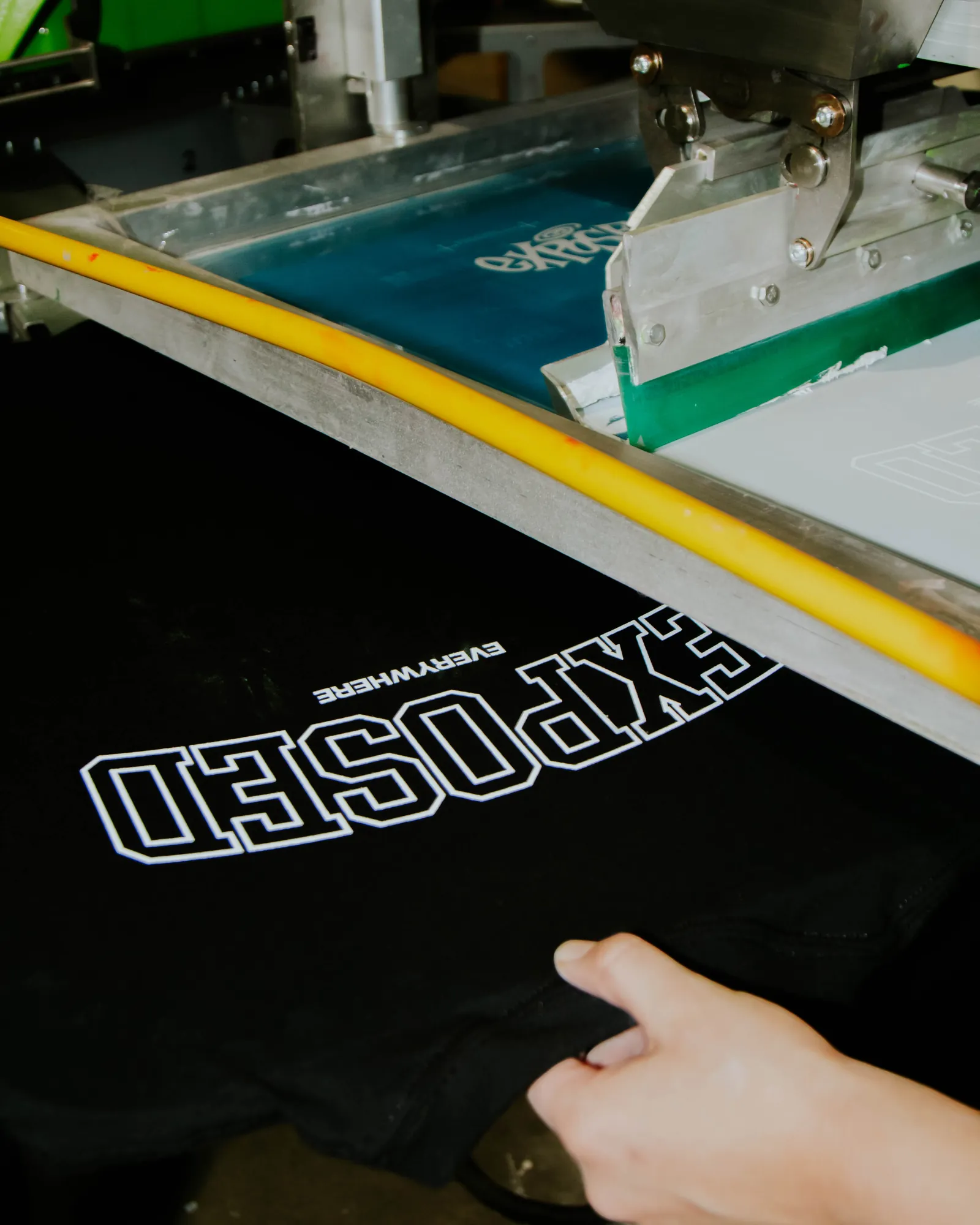
Short answer: the blanks worth your money in 2026 are the Gildan 5000 (budget events), Bella+Canvas 3001 (soft retail fit), Comfort Colors 1717 (garment-dyed heavyweight — our house default), AS Colour (premium consistency) and Shaka Wear (7.5 oz boxy streetwear). Which one is "best" depends on who's wearing it and why — and that's exactly what this guide sorts out.
We're Fully Exposed Graphics, a screen printing and embroidery shop in Albuquerque. Every blank on this list has been on our press hundreds of times. We've watched them shrink, fade, pill and survive. Here's how they actually behave — on press and in the wash.
The blank is half the product
Customers obsess over the design. Printers obsess over the garment, because we know a secret: nobody compliments a shirt they don't want to wear. The crispest print in the world can't rescue a blank that feels like sandpaper, twists at the seams, or shrinks a full size on wash day.
It cuts the other way too. Put a clean one-color print on a heavyweight garment-dyed tee and people assume it came from a boutique. Same ink, same screen, same squeegee — different shirt, different product. If you're building a brand, the blank is the brand experience. The print is just the introduction.
How a print shop judges a blank t-shirt
Before any shirt earns a spot on our shelf, we're looking at five things:
- Fabric weight. Measured in oz/yd² (or gsm overseas). Around 4.2 oz is lightweight and drapey; 5.3 oz is midweight; 6 oz and up is heavyweight with real structure. Heavier isn't automatically better — it's a style choice.
- Ringspun vs open-end cotton. Ringspun yarn is spun tighter and finer, which means a smoother knit. Open-end is faster to produce, cheaper, and noticeably coarser in the hand.
- Construction. Side-seamed shirts fit like retail; tubular-knit shirts are cheaper to make and boxier. Check the collar too — a thin, flimsy neck rib is the first thing to die.
- Shrinkage. "Pre-shrunk" is a spectrum, not a promise. Garment-dyed blanks take their shrink before printing; some budget tees still tighten up a size after the first hot wash.
- Print surface. This is the printer's criterion nobody talks about. A smooth, tight knit lets ink sit clean, holds fine halftones, and needs fewer strokes. A rough, open knit swallows detail and fights you at every pass.
The best shirts for screen printing, ranked
Ranked from budget workhorse to heavyweight grail — because the "best" blank at a fundraiser is the wrong blank at a streetwear drop.
Gildan 5000 & Softstyle — the budget workhorse
The 5000 is a 5.3 oz cotton tee that's been the default event shirt for decades. It's cheap, it's in stock everywhere in every color and size from S to 5XL, and it holds a plastisol print just fine.
Pros: lowest cost, unbeatable availability, generous classic fit, survives industrial abuse. Cons: open-end cotton means a coarser surface and a stiffer hand, the fit is boxy in an unfashionable way, and nobody has ever called one "premium." The ringspun Softstyle 64000 (4.5 oz) fixes most of the feel complaints for a little more money.
Who it's for: fundraisers, 5Ks, work crews, volunteer shirts — anywhere quantity and budget outrank fashion.
Bella+Canvas 3001 — the retail-fit standard
The 3001 is a 4.2 oz combed ringspun tee, side-seamed, with a genuinely retail silhouette. That tight, smooth knit is also one of the best print surfaces in the business — it's why the 3001 is the industry reference for DTF and DTG as well as screen printing. Fine linework and halftones hold beautifully.
Pros: soft out of the bag, huge color library, modern fit, superb ink laydown. Cons: it's lightweight — people who equate weight with quality will call it thin — and the slimmer cut means some crowds should size up.
Who it's for: startups and small brands that want a shirt customers reach for on laundry day, restaurant and coffee shop staff tees, anyone printing detailed art.
Comfort Colors 1717 — the garment-dyed heavyweight
The current king of merch, and the blank we stock by default. The 1717 is a 6.1 oz ringspun tee that's dyed after it's sewn, which does two things: every colorway gets that lived-in vintage fade, and most of the shrinkage happens in the dye house instead of your customer's dryer.
Pros: the washed-out color palette nothing else matches, substantial weight, a thick collar that keeps its shape, and a surface that makes water-based and soft-hand plastisol prints look instantly vintage. Cons: garment dyeing means slight shade variation between lots (part of the charm, but know it going in), the fit is relaxed and boxy, and it costs more than a standard tee.
Who it's for: band merch, church and event merch, coffee shops, anyone chasing that faded 90s look people pay retail for.
AS Colour — premium consistency
AS Colour built its reputation on the thing most blank makers can't deliver: consistency. Dye lots match. Sizing doesn't drift year to year. The Staple (180 gsm — about 5.3 oz) is a clean midweight with a fit that reads streetwear without shouting it, and the minimal labeling makes relabeling painless for brands.
Pros: retail-grade construction, repeatable colors order after order, smooth dense knit that prints crisp. Cons: premium price tier, and US warehouse stock on some colors and styles is thinner than the big domestic brands — plan reorders ahead.
Who it's for: established brands that reorder the same shirt for years and need drop #5 to match drop #1.
Shaka Wear — the heavyweight streetwear drop shirt
The 7.5 oz max heavyweight is the LA streetwear silhouette: boxy, drop-shouldered, thick enough to stand up on its own. When a client says they want their drop to feel like a shirt off a boutique rack instead of a merch table, this is usually the blank we reach for.
Pros: maximum structure and weight, the boxy oversized fit that defines current streetwear, and a dense surface that makes big bold prints hit hard. Cons: it's hot in an Albuquerque summer, the boxy cut isn't for every customer, and the colorway range is narrower than Gildan or Bella+Canvas.
Who it's for: clothing brands running limited drops, anyone selling at streetwear prices who needs the garment to back it up.
A word on tri-blends
Tri-blend tees (cotton/polyester/rayon) are some of the softest, drapiest shirts you can buy — and they change the printing conversation. Standard plastisol can sit heavy on them, and the polyester content brings dye migration into play. Our recommendation: print tri-blends with water-based or discharge-style inks, which sink into the fabric for a soft, heathered, vintage result. It's a different look — many brands love it — but decide on the ink with the shirt, not after.
Blank t-shirt comparison chart
| Blank | Weight | Fit | Feel | Best for | Cost tier |
|---|---|---|---|---|---|
| Gildan 5000 | 5.3 oz | Classic boxy | Sturdy, basic | Events, crews, budget runs | $ |
| Bella+Canvas 3001 | 4.2 oz | Retail, slimmer | Soft, light | Startups, detailed art, staff tees | $$ |
| Comfort Colors 1717 | 6.1 oz | Relaxed boxy | Thick, broken-in | Vintage-look merch drops | $$ |
| AS Colour Staple | 180 gsm (~5.3 oz) | Regular streetwear | Smooth, dense | Brands that need consistency | $$$ |
| Shaka Wear heavyweight | 7.5 oz | Boxy, drop-shoulder | Heavy, structured | Streetwear drops | $$$ |
| Tri-blends | Light | Retail, drapey | Softest available | Vintage soft-hand prints | $$ |
On cost: the blank is the biggest lever in your total — moving from a basic tee to a heavyweight or garment-dyed one shifts your per-shirt cost more than adding an ink color does. Quantity and color count handle the rest (screen printing runs a 30-piece minimum, and each ink color needs its own screen). We break down how those pieces interact in our screen printing pricing guide, and we itemize blank, print and finishing separately on every quote so you can see what each choice actually costs you.
The best blank t-shirts for streetwear brands
If you're launching a brand rather than outfitting an event, the calculus changes. Your blank has to justify a retail price, fit the silhouette your audience actually wears, and be available again when you reorder. That narrows the field fast: Shaka Wear for heavyweight boxy drops, AS Colour for consistent retail-fit staples, Comfort Colors when your aesthetic leans vintage.
Then print like a brand: water-based or soft-hand inks, deliberate placements, and the same blank every drop so your customers learn your fit. We walk through the whole playbook — margins, blanks, art, minimums — in how to start a clothing brand, and our brand merch program handles the production side so you can stay on design. Every order gets a digital proof before a single screen gets burned, and every piece is hand-inspected before it ships.
Blank shirt FAQ
What shirts do print shops use?
Most shops quote Gildan by default because it's cheap and everywhere. Better shops carry a range: Bella+Canvas 3001 for retail softness, Comfort Colors 1717 for garment-dyed heavyweight, AS Colour and Shaka Wear for brand work. We stock Comfort Colors as our house default and print all of the above — or bring your own blanks.
Are Comfort Colors good for screen printing?
Very. The 6.1 oz ringspun fabric takes ink cleanly, and because the shirt is dyed after sewing, most shrinkage is already out of the way before your print goes on. Pair it with water-based ink and the print looks like it's been part of the shirt for years — in the good way.
What is the best heavyweight blank for screen printing?
Two answers. For boxy streetwear structure, the Shaka Wear 7.5 oz max heavyweight. For vintage garment-dyed character, the Comfort Colors 1717 at 6.1 oz. Both print beautifully; pick based on the fit and finish your audience expects.
Bring the design. We'll match the blank.
Tell us what you're making and who it's for, and we'll recommend the blank honestly — including when the cheaper shirt is the right call. Send your art (or just the idea — we design in-house), pick a quantity, and we'll return an itemized quote. Typical turnaround is 7–10 business days, rush available.
Quick answers
What shirts do print shops use?
Most shops run Gildan for budget orders, Bella+Canvas 3001 for a soft retail fit, and Comfort Colors 1717 for garment-dyed heavyweight merch. Fully Exposed Graphics stocks Comfort Colors by default and also prints AS Colour, Shaka Wear, Gildan and Bella+Canvas.
Are Comfort Colors good for screen printing?
Yes. The Comfort Colors 1717 is a 6.1 oz ringspun cotton tee that's garment-dyed, so most shrinkage happens before your print goes on. Its smooth, heavy surface takes plastisol and water-based ink beautifully, which is why it's the current merch favorite.
What is the best heavyweight blank for screen printing?
For a boxy streetwear fit, the Shaka Wear 7.5 oz max heavyweight is the standard drop shirt. For a vintage garment-dyed look, the 6.1 oz Comfort Colors 1717 is the pick. Both print clean; the right one depends on the fit and finish you want.