
How much does screen printing cost?
There's no list price, and any shop that hands you one is guessing. Here's how a screen print quote is actually built, what moves it up and down, and how to get an exact number for your job.
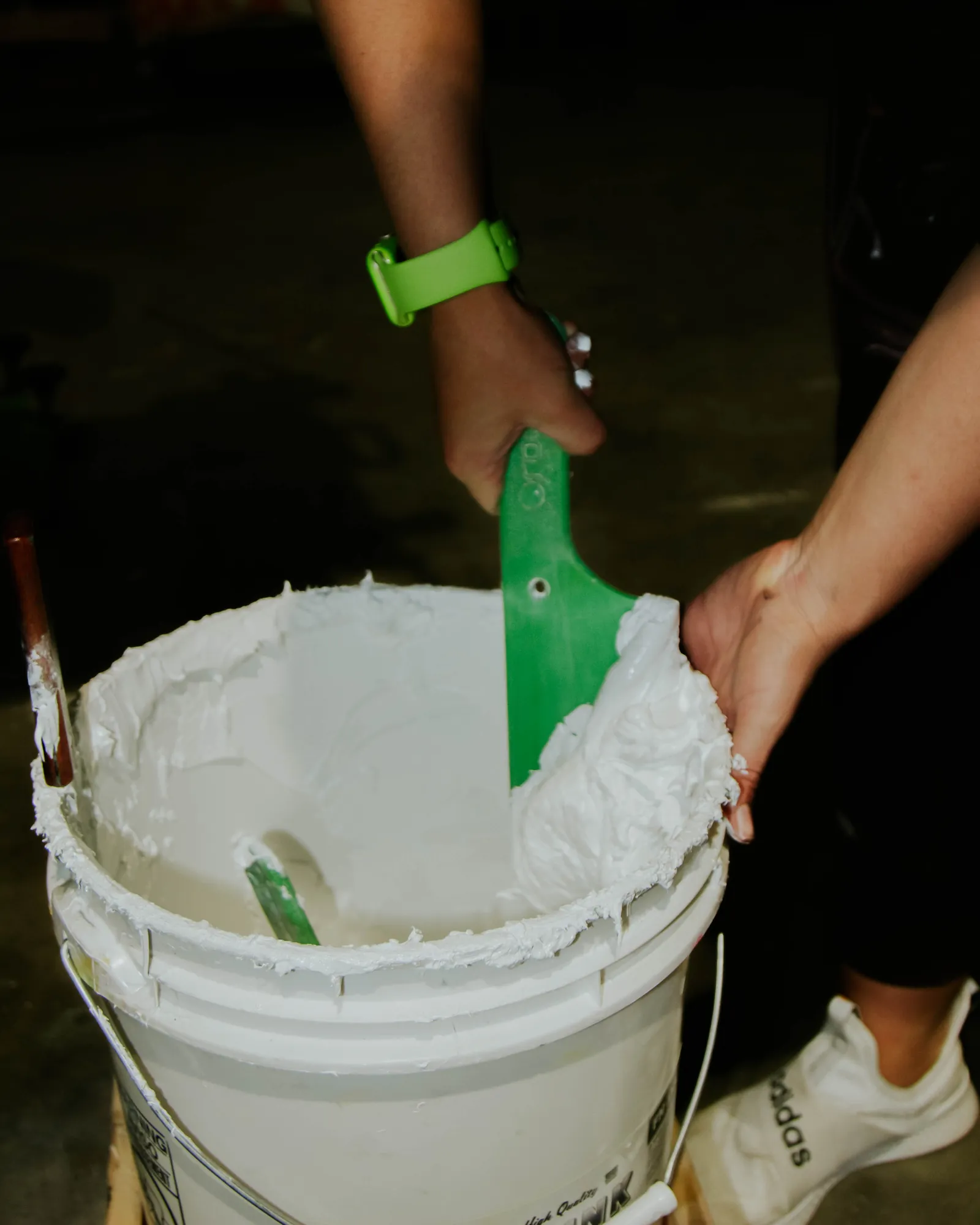
Short answer: screen printing doesn't have a list price. It has a formula. Every order is built from the same four inputs, and once you know what they are, you can predict which direction your quote will move before you even send it. That's worth more than a number off a chart, because a chart can't see your garment, your art, or your deadline.
We're Fully Exposed Graphics, a screen printing and embroidery shop in Albuquerque. "How much does screen printing cost" is the first question every customer asks us. Here's the honest answer: not a number, but the structure behind every number. Read this and you'll be able to read any print quote you're handed, ours or anyone else's.
Why there's no single price
A printed shirt isn't a product sitting on a shelf. It's a short manufacturing run built for one customer, and the cost of that run changes with almost every decision you make.
Two orders for the same fifty shirts can land a long way apart. One is a single-color left chest on a basic cotton tee with three weeks of lead time. The other is a four-color front with a white underbase on a heavyweight garment-dyed blank, needed Friday. Same piece count, completely different job on the floor.
That's why a published per-shirt price is almost always misleading. It's either the cheapest thing a shop can possibly print, used as bait, or it's padded high enough to cover the worst case so nobody loses money. Neither one is your price.
What doesn't change is the structure. Every screen print quote in this industry is built from the same parts.
The four things in every screen print price
- The blank garment. The actual shirt, bought from a mill or distributor before we touch it. That runs from a basic open-end cotton tee up through ringspun retail fits, heavyweight garment-dyed pieces, tri-blends and performance polyester. It's a hard cost on every single piece, and it's the line you control most.
- Screen setup, one per ink color. Every color in your design gets its own screen. Mesh stretched on a frame, degreased, coated with emulsion in the dark, dried, exposed under UV light (that's the fully exposed part), washed out, dried again, taped, then registered on press so the colors land on top of each other correctly. Afterward the screen gets reclaimed. That's labor and materials spent before shirt number one exists.
- Press time. Someone loads, prints and unloads every garment by hand. A one-color left chest moves fast. A four-color front with tight registration and a flash cure between hits moves slower, because each shirt takes more strokes and more handling. Ink lives here too.
- Finishing and curing. Every piece rides a conveyor dryer long enough to reach the temperature the ink needs to fully cure, then gets inspected, counted, folded and boxed. Undercured ink cracks and washes out. This step is the difference between a print that survives fifty washes and one that doesn't.
Every quote you'll ever get is some combination of those four. The rest of this article is how each one moves.
Why the price per shirt drops as quantity goes up
This is the single most useful thing to understand about screen printing, so here it is plainly: setup is a fixed cost, and quantity divides it.
Burning the screens for your design costs the same whether we print a dozen shirts or five hundred. Same emulsion, same exposure, same washout, same registration on press. That cost gets spread across however many pieces come off the run, so ordering twice as many shirts means each shirt carries roughly half as much setup.
The other costs, the garment and the press time, are per piece. They scale with your order instead of shrinking. So the curve is steep at the bottom and flat at the top: moving from a dozen to two dozen changes your per-shirt number noticeably, while moving from a large run to a slightly larger one barely moves it at all.
The practical version: before you commit, ask what the next quantity break costs. Because setup is already paid for, the extra shirts are cheaper than the first ones were, and a bigger order sometimes lands close to the same total.
Rule of thumb: the smaller your order, the bigger the share of fixed setup every shirt has to carry. That's the entire economics of screen printing in one sentence. If a per-shirt number looks high to you, quantity is almost always the fastest lever, and color count is the second.
Why every ink color adds cost
One color means one screen. Four colors means four screens, four separations, four setups, four registrations and four passes over every shirt on the press. Color count hits your quote twice: once as fixed setup, and again as press time on every piece.
Dark garments add one more wrinkle. Bright ink printed straight onto a dark shirt comes out dull and muddy, so we lay down a white underbase first, flash cure it, then print the color on top. That underbase is its own screen, its own setup and its own pass, which is why the same design usually costs a little more on black than on white.
Photographic or heavily blended artwork goes further still, into halftones and simulated process work, which can mean six or more screens for what looks to you like one image. Beautiful when it's done right, and the expensive end of the craft.
None of that makes fewer colors a compromise. Some of the best work leaving our shop is one or two colors placed with intent. A strong simple design usually beats a busy one, on the shirt and on the invoice.
Garment choice is your biggest lever
Of everything on a quote, the blank is usually the largest single line, and it's the one that's entirely your call.
The spread between a basic open-end cotton tee and a heavyweight garment-dyed or retail-fit ringspun blank is wide, and it multiplies by every piece in your order. Change nothing else about the job, swap only the garment, and the total moves more than any other single decision you can make.
That doesn't mean go cheap. It means choose on purpose. For a giveaway at a booth, a basic blank does the job and lets you print more of them. For merch you're selling, or staff shirts people wear all week, a better blank fits better, feels better and actually gets worn, which is the whole point of printing it. If you're selling the shirt, the nicer blank tends to pay for itself in what you can charge.
Fabric matters too. Performance polyester needs inks that block dye migration, and tri-blends and garment-dyed pieces behave differently under the platen. Tell us what the shirts are for and we'll steer you to a blank that fits the use and the budget.
The fees in this industry, and what they pay for
Every shop has these. The difference between a good shop and a bad one isn't whether the fees exist, it's whether you find out about them before or after you say yes.
- Screen and setup fees. Charged per color, per design. This covers everything that happens in the screen room: coating, exposing, washout, taping, registration on press and reclaiming the mesh afterward. It's the fixed cost that quantity divides.
- Art and vectorization. If artwork arrives as a small JPG, a phone screenshot or a logo pulled off a website, someone has to rebuild it as clean vector line work so the edges stay sharp at print size. Color separations for multi-color designs live here too.
- Rush. Anything faster than standard turnaround means moving your job ahead of work already on the schedule, and sometimes paying expedited freight on blanks or running past normal hours to hit your date.
- Specialty inks and effects. Puff, discharge, water-based, metallic, glow, high-density. They cost more to buy, print slower, and usually need test prints and different cure settings dialed in before the run.
- Extra print locations. A back print, a sleeve hit or a neck label is a separate design with its own screens, its own setup and its own pass on press. Two locations is closer to two jobs than to one.
Here's our end of it. We quote all of this up front and itemized, line by line, before anything touches a press: the garment, the setup, the print, and any extras broken out separately. You can see exactly what you're paying for and change your mind about any of it. Nothing shows up on your invoice that wasn't on your quote.
How to get the best price on your order
- Order at a quantity break. Ask what the next tier up costs before you lock in a number. Setup is already covered by then, so the extra shirts come cheaper than the first ones did.
- Simplify your color count. Every color you cut removes a screen, a setup and a pass on press. Look at your art and ask whether that fourth color is doing real work.
- Send vector art. AI, EPS, PDF or SVG files go straight to separations with no rebuild time. It's the easiest savings on this list.
- Plan ahead of your deadline. Standard turnaround always beats rush. A couple of weeks of lead time costs you nothing and takes rush charges off the table entirely.
- Mix sizes, not designs. Running S through 3XL of one design costs nothing extra. Changing the design or the ink colors partway through the run means new setup.
- Reorder the same design. We archive your art and separations, so a repeat run skips most of the front-end work. Reorders are the cheapest shirts we print.
- Tell us your budget. Give us a target and we'll build to it using the levers that matter, usually the garment and the color count. That's a better conversation than the two of us guessing at each other.
When screen printing is the wrong tool
Screen printing is the best value in the shop once your order is big enough to spread setup across a real run and your design uses a manageable number of colors. Below that line the math stops working, and we'd rather tell you than take the order.
For small batches, full-color or photographic artwork, or runs where every piece is different, DTF transfers are the better answer. There are no screens, so there's no setup to spread and no minimum to hit, and color count doesn't change the price. Print one shirt or twenty. Side-by-side breakdown here: DTF vs screen printing.
And if you're putting a logo on polos, caps or workwear, embroidery is priced by stitch count rather than color count, which changes the math again.
Get a real number, free and itemized
Understanding the structure gets you most of the way there. The only thing that gets you an actual number is having someone price your actual job.
Send us five things and we can quote it: how many pieces, what garment (or just what the shirts are for, and we'll suggest one), how many colors and how many print locations, when you need them, and the art file. A rough sketch is enough to start.
Quotes are free, itemized and no obligation, usually back within one business day. And if a different method would cost you less than screen printing, we'll say so before you spend anything.
Quick answers
How much does screen printing cost per shirt?
There is no single per-shirt price, because every order is a short manufacturing run priced from four things: the blank garment, one screen setup per ink color, press time, and curing and finishing. Quantity, color count and garment choice move the number more than anything else. Send us your details and we will quote it free and itemized, usually within one business day.
Why do screen printers charge setup fees?
Each ink color needs its own screen, which has to be coated with emulsion, dried, exposed under UV light, washed out, taped, registered on press and reclaimed afterward. That is labor and materials spent before the first shirt prints. Setup is a fixed cost, which is why it is often reduced on a reorder of a design we already have on file.
Why is screen printing cheaper per shirt on large orders?
Setup costs the same whether we print a dozen shirts or several hundred, so it gets divided across the run. The more pieces you order, the smaller each shirt's share of that fixed cost. That is why the per-shirt price falls as quantity rises and then flattens out on big runs.
Is screen printing cheaper than DTF?
It depends on quantity and color count. Screen printing pulls ahead once the order is large enough to spread setup across the run and the design uses a manageable number of colors. For small batches, full-color or photographic art, or runs where every piece is different, DTF is usually the better deal because it has no screens, no setup to spread and no minimum.